

If you have just bought an electric vehicle, or you are about to, a Level 2 charger in the garage or driveway is usually the next question. The installation itself is often the easy part. What happens before it (checking your panel, choosing the right unit and filing the ESA permit) is what decides how smoothly it goes.
Level 1 vs Level 2
Natural Resources Canada (NRCan) defines two levels of home charging, both supplied as alternating current:
- Level 1 uses a standard 120 V outlet. ESA calls it the slowest way to charge an EV.
- Level 2 runs at 208/240 V, the kind of special outlet used for a stove or dryer. ESA notes it charges faster than Level 1.
Level 3 (DC fast charging) is a separate category. NRCan describes it as a DC outlet not found in homes, and ESA says it is designed for commercial use and not suitable for home installation.
If you stay with Level 1, ESA recommends a dedicated circuit for charging, and an outdoor outlet used for charging should be protected by a GFCI. Level 1 also leaves the utility out of it: GrandBridge Energy, the utility for Cambridge, says you do not need to contact it about a service upgrade to charge on Level 1.
What we check first
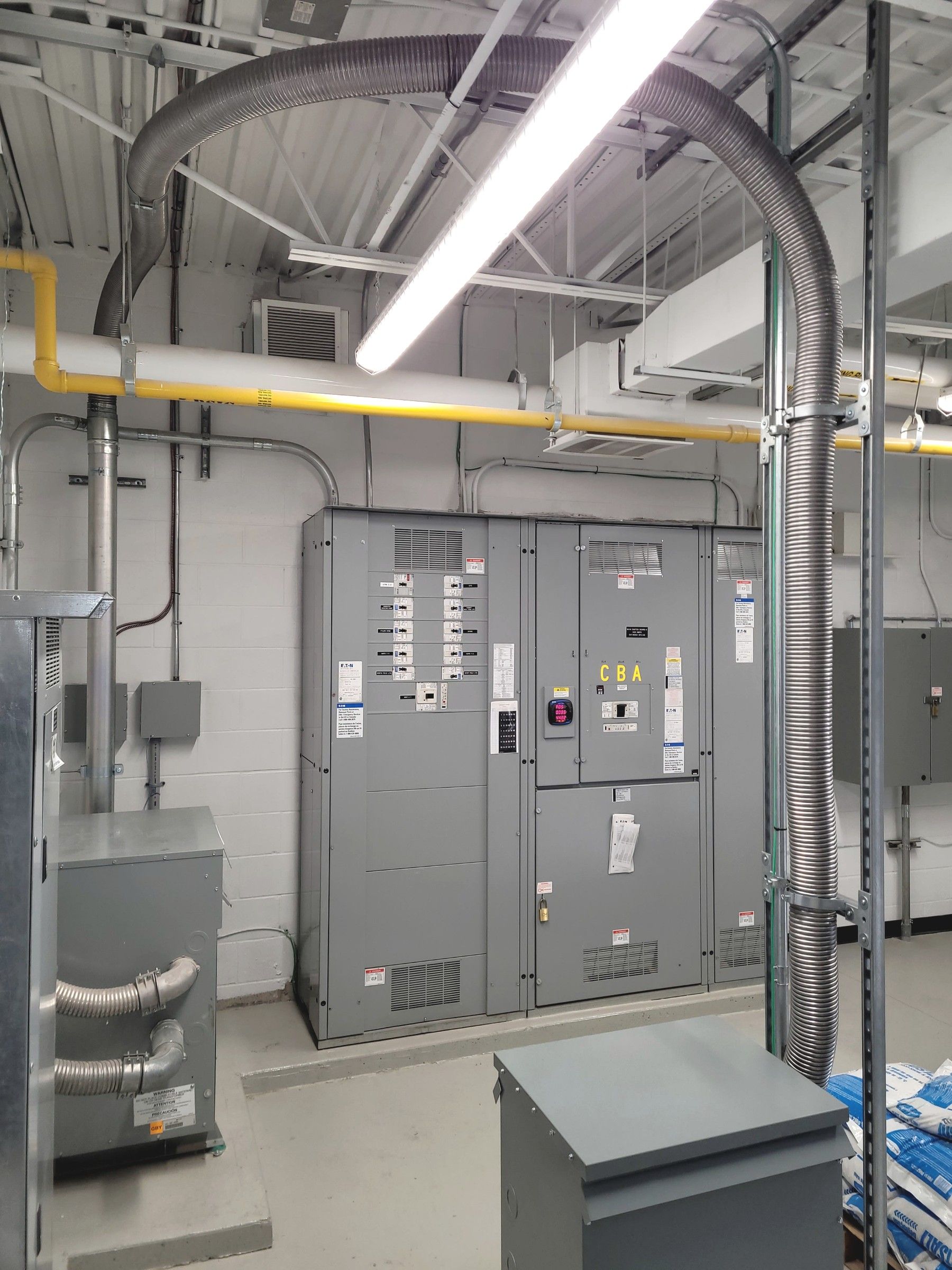
Panel capacity and a load calculation
ESA’s advice to homeowners is direct: EVs can use a lot of power, so make sure your panel can handle the extra load. Before recommending anything, we run a load calculation for your existing service with the charger added. ESA’s bulletins also allow that calculation to start from your home’s actual peak demand over the last 12 months, taken from your utility’s data, rather than only a theoretical figure.
If the numbers work, the charger goes on your existing service. If they don’t, there are two routes: a service upgrade (our 100 amp vs 200 amp panel upgrade guide explains what that involves) or an energy management system, covered below.
Distance from the panel to where you park
The farther the parking spot is from the panel, the longer the wiring run, and the route matters too. Running along an unfinished basement ceiling, through a finished one, or underground to a detached garage are very different jobs. ESA also suggests mapping out how you park, so the charger sits close to your car’s charge port and you are not running a cord across the garage. Keep the cable off the floor to avoid tripping and wear.
Indoor or outdoor
If the charger will be outside, say on a driveway in Hespeler or Preston, ESA says to use a charging system rated for outdoor use. It is also worth checking the operating temperature range in the manufacturer’s specifications before an Ontario winter.
A certified charger
ESA says an EV charging system must carry an official Canadian certification mark from a recognized certification or evaluation agency. ESA also warns that uncertified charging equipment bought online can be dangerous, even when the price is tempting.
Hardwired or plug-in?
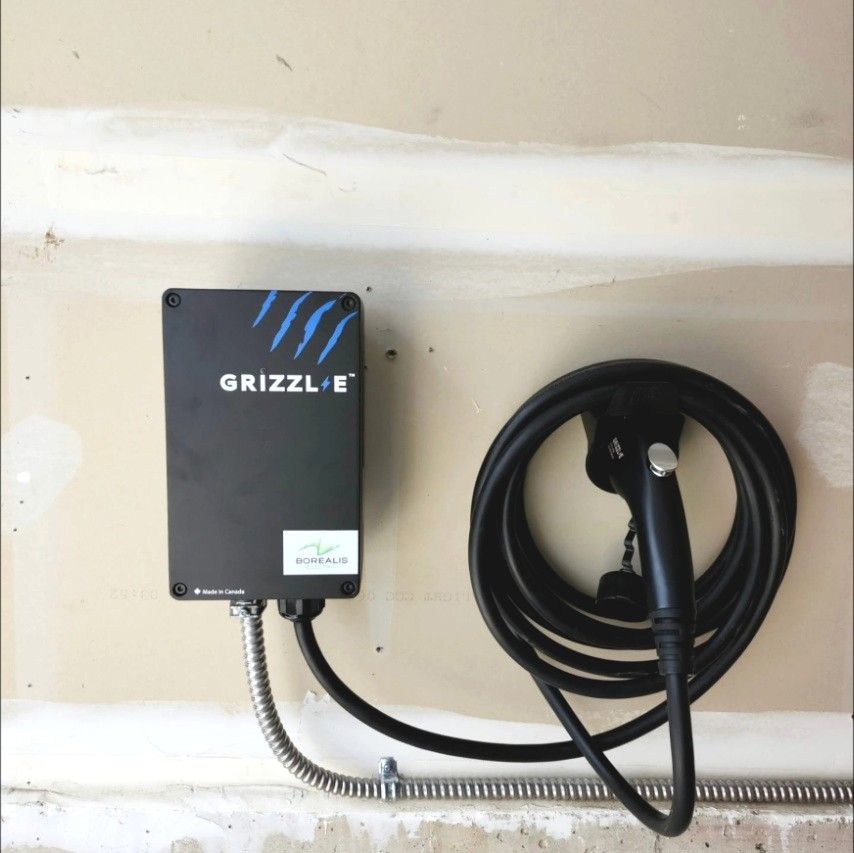
Level 2 chargers come in two styles: hardwired units connected directly to their circuit, and plug-in units that plug into a 240 V receptacle. A few points from ESA’s current bulletin on EV charging systems (Bulletin 86-1-7) shape the choice:
- 50 A receptacles: a plug-in charger on a 50 A receptacle (the 14-50 or 6-50 configuration) must be protected by a 50 A breaker or fuse.
- Turned-down settings: many chargers can be set to draw less than their maximum, which helps on a busy panel. ESA only lets the circuit be sized to that lower setting when the charger is fixed in place (a tool is needed to remove it), access to the setting is restricted, and a permanent label shows the setting.
- Its own circuit: a charger needs its own branch circuit unless an energy management system is installed.
Whichever brand you choose, a Tesla Wall Connector or another certified unit, ESA’s bulletin ties features like a turned-down setting to following the manufacturer’s instructions, so the unit’s installation manual is what we install to. ESA also notes that many app-based chargers let you set the time of day charging happens and the maximum charging current.
Energy management systems: an alternative to a service upgrade
ESA defines an energy management system (EMS) as equipment that controls electrical loads by connecting, disconnecting, increasing or reducing the power to them. For EV charging, that means watching your home’s load and turning the charger down or off when the rest of the house is busy.
ESA’s Bulletin 86-1-7 says an EMS is permitted in any type of building. Where it monitors the home’s service and controls the charger, the charger’s load does not have to be counted in the calculated load. For some homes, that means a Level 2 charger without a service upgrade.
One caution from the same bulletin: a charger on its own only counts as an EMS if it has features that let it function as one. If you are also planning other large loads, like a heat pump or a hot tub, a service upgrade may still be the better long-term move. We will lay out both options.
The ESA permit and Certificate of Acceptance
ESA states that all EV charger installations require an electrical permit, also called a notification of work, filed before work starts. It is separate from a building permit. In Ontario, anyone you hire to do electrical work in your home must, by law, be a Licensed Electrical Contractor with an ECRA/ESA licence (ours is 7017294), and the contractor files the permit. Our guide to ESA permits covers the process in more detail.
The installation has to meet the Ontario Electrical Safety Code, where Section 86 covers EV charging systems. Once the work is accepted, you should receive an ESA Certificate of Acceptance. ESA recommends keeping both the permit and the certificate, since they can matter for home insurance and resale.
If a service upgrade is needed, the utility is involved too. In Cambridge, GrandBridge Energy’s process is for the licensed electrician to contact it and submit a Request Service Layout form before the upgrade.
Getting a quote
Whether you are in Cambridge, Kitchener, Waterloo or Guelph, we can check your panel, run the load calculation and recommend the right setup for your home and vehicle. See our residential services, or contact us for a free quote. Planning chargers for a business, condo or fleet instead? Read our guide to EV charging for workplaces, retail and multi-unit buildings.
Sources
- ESA: Electric Vehicles & Charging Systems
- ESA: Charge Safely EV Brochure (PDF)
- ESA: Electrical Vehicle Charging Systems at Home (PDF)
- ESA: Ontario Electrical Safety Code Bulletin 86-1-7, Electric vehicle charging systems (PDF)
- ESA: Ontario Electrical Safety Code Bulletin 8-3-16, Maximum circuit loading and demand factors (PDF)
- ESA: Guide to EV Charger Installation for Multi-Residential Buildings (PDF)
- Natural Resources Canada: Electric vehicle charging
- GrandBridge Energy: Electric Vehicles
General information for Ontario, current when published. Electrical work in Ontario must meet the Ontario Electrical Safety Code; talk to a licensed electrical contractor about your situation.