

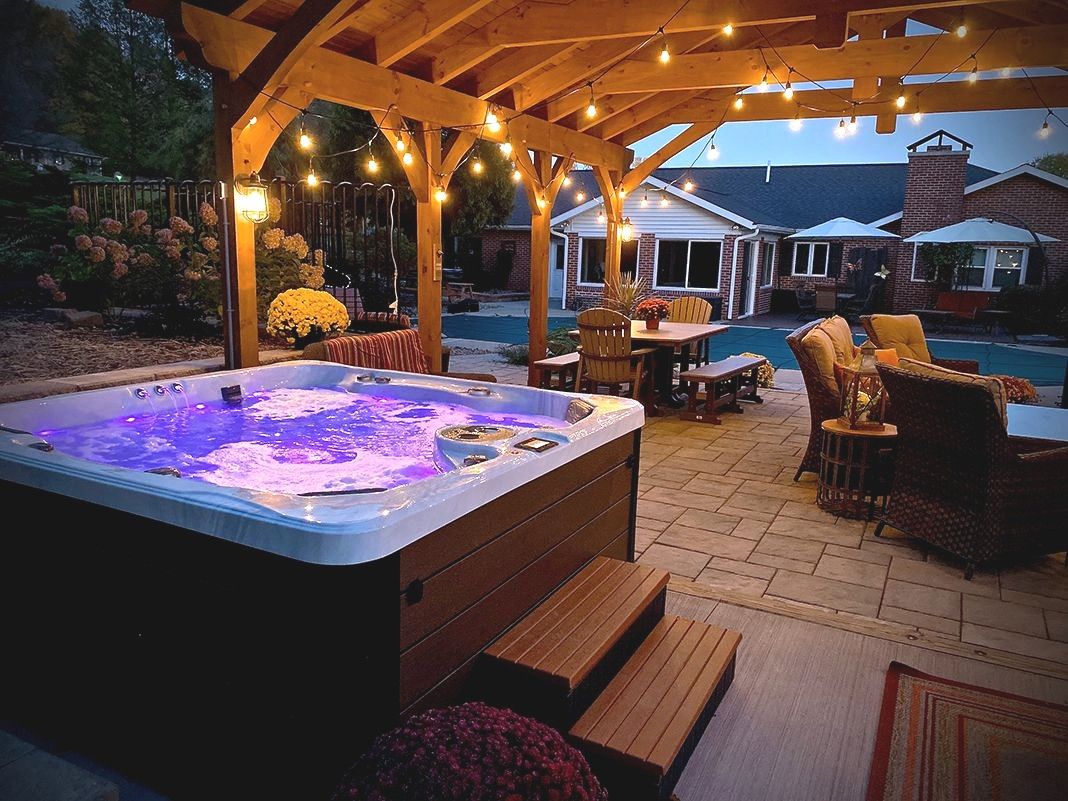
A hot tub or swim spa is one of the largest electrical loads many homes will ever add, and the wiring is far easier to get right before the tub is sitting on its pad. The Electrical Safety Authority (ESA) points out that pools, spas and hot tubs have very specific electrical requirements. Here is what we walk through with homeowners, from the spec sheet to ESA’s final review.
Start with the manufacturer’s spec sheet
The manufacturer sets the tub’s electrical requirements, so have the spec sheet or installation manual ready before you ask for a quote. It tells us the voltage, the size of the GFCI breaker and whether you need one circuit or two.
The numbers vary a lot. Hydropool, a Mississauga manufacturer, lists a 50 or 60 amp GFCI for most of its swim spas in North America, and two GFCI breakers for models with a separate spa section (40 amps for the spa plus 50 or 60 amps for the swim side). At the small end, Hot Spring’s manual for its 115 volt Hot Spot models calls for a dedicated 15 or 20 amp, GFCI protected, grounded circuit. Both manuals leave the electrical connection to an electrician, and in Ontario anyone you hire for electrical work must be a Licensed Electrical Contractor.
Check the certification mark too. ESA says electrical products sold or used in Ontario must be approved by an accredited certification or evaluation agency. An ESA technical advisor has warned that some tubs bought online arrive without approval for use in Canada and then can’t be connected, and that refurbished tubs with replaced parts may void the certification.
GFCI protection and safe distances
Hydropool’s manual says to connect only to a dedicated circuit protected by a Class A two-pole GFCI. ESA’s pool and hot tub bulletin adds that electrical equipment within 3 m of the inside walls of a pool or hot tub must be GFCI protected unless a fence, wall or other permanent barrier separates it. ESA’s examples include lighting, a central air conditioner and the electricity meter.
That’s why location matters. Before you pick a spot, look at what sits within 3 m of it. Other placement points from ESA:
- A receptacle can’t be closer than 1.5 m to a pool or hot tub, and the GFCI devices themselves can’t be within 3 m unless they’re guarded.
- Outdoor 15 and 20 amp receptacles need Class A GFCI protection and a cover suitable for wet locations, marked “Extra Duty”, that protects them with a plug in place.
- The tub has to meet minimum clearances from overhead power and communication lines. Your local utility sets its clearance rules by line voltage, and ESA notes some utilities don’t permit any overhead wiring over a pool or hot tub.
Where the disconnect goes
You also need a way to shut off power at the tub for service. ESA’s guidance for electricians says the hot tub’s disconnect must be readily accessible, located outdoors when the tub is outside, and lockable in the off position when it isn’t within sight of the tub. It also has to be kept back from the water unless it sits behind a permanent barrier. Your electrician will confirm the required distance and the best spot on your property.
Bonding, the pad and the trench
ESA says the Ontario Electrical Safety Code treats hot tubs the same as pools for bonding, which ties the tub and nearby conductive surfaces together at the same electrical potential. In one case ESA described, a family got shocks passing a baby out of a hot tub to someone standing on the concrete; the fix was bonding the rebar in the concrete to the tub.
The current code is more specific. ESA says hot tubs may need to be bonded to a copper ring of No. 6 AWG bare conductor embedded in conductive surfaces such as concrete slabs, and that notifications filed on or after October 1, 2025 must meet the revised rule. If you’re pouring a new pad, talk to your electrician before the concrete goes in.
Underground work has its own steps:
- Call Ontario One Call before digging. ESA notes that privately owned lines, such as wiring to a shed, need a private locating service.
- ESA’s bulletin treats conduit buried in the ground as a wet location, so the NMD90 cable used inside most homes isn’t acceptable in it.
- If a gas line shares the trench, ESA calls for at least 300 mm of separation from the electrical wiring.
Whether we use conduit or direct-buried cable depends on the route and the equipment, and we explain the choice when we quote.
Panel capacity for large tubs and swim spas
A large swim spa can add one or two big circuits to a panel that may already be carrying air conditioning, a range or an EV charger. We check both the space in the panel and whether the service can carry the load.
A 100 amp service doesn’t automatically mean an upgrade. ESA’s bulletin on circuit loading describes how an electrician can assess adding a hot tub to an existing 100 amp service: take the home’s actual peak demand over the last 12 months from the local utility, add 100 percent of the tub’s nameplate rating, and compare the total with the rating of the service conductors or main breaker, whichever is lower. If it doesn’t fit, our panel upgrade guide explains the next step. Finishing the basement the same year? Plan both loads together with our basement renovation guide.
Plug-and-play tubs still need the right outlet
Smaller “plug and play” tubs connect with a cord. ESA’s technical advisor describes them as end-user products that come with a ground fault circuit interrupter built into the cord, with the manufacturer’s instructions saying where they can go. That doesn’t mean any outdoor outlet will do:
- Hot Spring’s 115 volt models need a dedicated circuit, which the manual defines as one not shared with patio lights, appliances or other loads, and the manual says never to use an extension cord.
- The 1.5 m receptacle distance, GFCI and “Extra Duty” cover rules above still apply.
- ESA’s bulletin requires arc-fault (AFCI) protection for an outdoor receptacle feeding pool or outdoor equipment when it’s mounted on the outside of the house and fed from a panel inside.
A new circuit or outlet is electrical work that needs an ESA notification.
Permits and ESA inspection
ESA notes that pool and hot tub installations usually need both a building permit and an electrical permit, and that the electrical one (a notification of work) is often overlooked. Check the building side with your city or township, whether the tub is going on a deck in Hespeler or a patio in Puslinch.
On the electrical side, whoever does the work files the notification with ESA. ESA reviews it and decides whether an inspection is needed, in person or remote. Once the work is complete, the notification holder calls ESA for a final review, and ESA issues a Certificate of Acceptance, which your insurer may ask for. Our ESA permit guide explains the process.
Planning your tub with us
Hot tub and swim spa connections are part of our residential electrical services. Send us the spec sheet and a rough idea of where the tub will sit, and we’ll tell you what the installation involves. Contact us for a free quote.
Sources
- ESA Bulletin 68-7-16: Swimming pool, hot tub, and spa installations
- ESA Bulletin 8-3-16: Maximum circuit loading and demand factors
- ESA Homeowner Electrical Safety Handbook: Outside Your Home
- ESA Homeowner Electrical Safety Handbook: Inside Your Home
- ESA Grounded in Ontario, Episode 1: Pools and Hot Tubs (transcript)
- ESA Toolbox Talks, April 2023: Pools and Hot Tubs
- ESA Toolbox Talks, May 2025: Code changes for pools, tubs and spas
- ESA: Make a Splash in Your Backyard
- ESA: What you need to know about electrical inspections (brochure)
- Hydropool 2025 Swim Spa Owner's Manual
- Hot Spring Hot Spot Collection Owner's Manual
General information for Ontario, current when published. Electrical work in Ontario must meet the Ontario Electrical Safety Code; talk to a licensed electrical contractor about your situation.