

Most electrical problems are not emergencies, but some are, and knowing the difference helps you stay calm. This guide sets out what the Electrical Safety Authority (ESA) and Ontario’s utilities tell people to do, starting with the situations that need 911. When in doubt, keep your distance and call for help.
Call 911 first
- Fire or smoke. ESA’s advice is simple: if a fire starts, get out immediately and call 911.
- Someone is hurt. Call 911 for anyone injured by electricity. ESA says there is no such thing as a safe shock, and anyone who gets a shock should seek medical attention, even if it seemed minor.
- A power line is down. See the next section.
Once everyone is safe, you can deal with the rest.
Downed power lines
ESA’s instructions for the public are clear. If a powerline falls on the ground, “always assume it is energized,” because wires “do not have to arc or spark” to be live. ESA says to “call 911 and keep at least 10 metres back, about the length of a full-size school bus,” and to call the local electrical distribution company to report it, since only a utility worker on site can confirm when the power is off.
ESA also notes that a downed line can electrify the ground around it, so you do not have to touch it to get a deadly shock. Keep others back too. If a line falls on your vehicle and you cannot drive away from it, ESA says to stay inside, call 911 and the local utility, and wait until a utility worker tells you it is safe to get out (its vehicle safety page explains what to do if a fire forces you out).
Burning smells, hot outlets and scorch marks
ESA lists warm cover plates, discoloured switches or outlets, signs of arcing, flickering lights and the smell of hot plastic insulation as possible signs of overheating connections. Its homeowner handbook adds that overheated plugs or outlets can mean an overloaded circuit or faulty wiring or equipment, which can cause shock or fire, and that you should contact a licensed electrical contractor as soon as possible.
What to do:
- Stop using the outlet, switch or appliance. Do not touch anything that is hot, scorched or smoking.
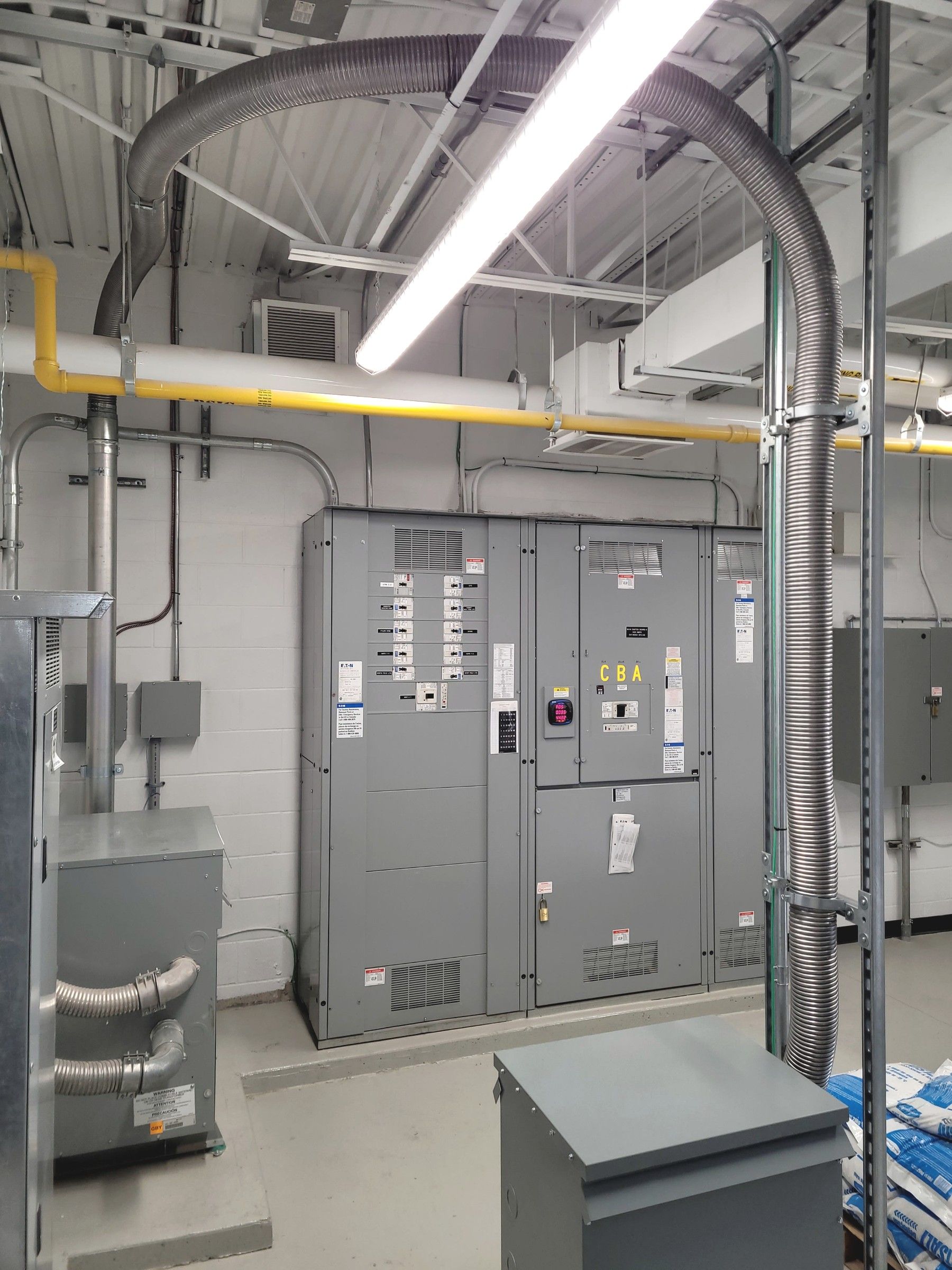
- If the panel is dry and easy to reach, and you are standing on a dry floor, switch off the breaker for that circuit. Never remove the panel cover or touch anything inside it.
- Call a licensed electrical contractor.
- If you see smoke or flames, get everyone out and call 911.
In older homes, such as some in Galt or Preston, it helps to know what wiring you have. Our guide to knob and tube wiring explains what to look for.
A breaker that keeps tripping
A single trip often has an obvious cause, like a space heater and a kettle on the same circuit. Alectra’s advice is to disconnect the cause first, then reset the breaker by moving it fully to OFF and then back to ON. Do not reset it if you smell burning, see scorch marks or the panel area is wet.
If it trips again, leave it off. ESA’s handbook says circuits that frequently trip indicate overloading or possible faulty wiring or equipment, which can be a shock or fire hazard. Call a licensed electrical contractor rather than resetting it over and over. If the cause is simply more load than the circuits can handle, the fix may be added circuits or, in some homes, a panel upgrade.
Partial power loss or a utility outage?
If the whole street is dark, it is likely a utility outage. Check your utility’s outage map:
- GrandBridge Energy serves Cambridge, Brantford, Brant County and North Dumfries.
- Enova Power serves Kitchener, Waterloo, Wellesley, Wilmot and Woolwich.
- Alectra Utilities serves 17 communities, including Guelph and Hamilton.
- Hydro One serves mostly rural customers across Ontario.
Enova, for example, asks customers to call and report an outage if it is not listed on the map. ESA adds that if you were cooking when the power went out, you should turn off the stove and oven right away.
If only part of your home or building has lost power, or lights are dimming and surging, treat it as a possible fault. ESA’s handbook says dim, surging or flickering lights can be a sign of a loose connection in a circuit, a fixture or your electrical service, and should be checked by a licensed electrical contractor. ESA also warns that power may only be partly interrupted, so there can be a shock hazard even if lights and appliances seem off.
After a storm, look for damage but do not touch it. ESA explains that the wire from the pole is usually the utility’s, but the mast and wiring attached to the house belong to you. If they are damaged, a licensed electrical contractor must make repairs, and ESA confirms with the utility before power is reconnected.
Flooded basements
ESA warns that electricity can move through water or wet flooring and cause a severe shock. Its instruction is: “Do not enter your basement if the water is above the level of electrical outlets, baseboard heaters or furnace, or is near your electrical panel. Call your local electric utility immediately and arrange for them to disconnect power to your home.”
Do not use electrical devices that have been in contact with floodwater, and do not attempt repairs yourself. ESA says to hire a licensed electrical contractor to check the system. The contractor files a notification with ESA, and ESA tells the utility when it is safe to reconnect. Ask for a copy of the ESA Certificate of Acceptance for your insurance.
Portable generators
- Outdoors only. ESA says never to run a generator inside your home or garage, because fumes can build up to fatal levels, and fans or open windows will not provide enough fresh air. Keep it in a dry area outdoors, away from open doors, windows and vents. Alectra warns that gasoline-powered equipment produces deadly carbon monoxide, and recommends a battery-operated carbon monoxide alarm.
- No improvised connections. ESA has warned that homeowners altering their wiring to run essential loads from portable generators risk fires and shocks for the people in the building and for utility workers. A generator connected to your wiring needs a transfer device, which stops generator power from flowing back into the utility system, and a notification of work filed with ESA. ESA strongly recommends hiring a licensed electrical contractor. An ESA inspector has also warned that interlock kits sold online that simply screw onto a panel’s front cover are not accepted in Canada.
- Cords and fuel. Plug appliances into the generator with grounded, three-prong cords rated for the job, and uncoil them so they do not overheat. Never connect a generator to appliances or wiring affected by flood water, and let the engine cool at least 2 minutes before refuelling.
For businesses
Ontario’s Fire Code requires self-contained (battery) emergency lighting units to be inspected and tested monthly, with a full-duration test at least every 12 months. After an outage is a good time to confirm they did their job. If damage leaves part of your building without power, temporary power can keep essential equipment running while permanent repairs are made. Our emergency services cover emergency response, troubleshooting, repairs, temporary power, emergency lighting and safety inspections.
Keep our number handy
For urgent electrical problems, call Borealis Electric at (519) 240-5151. For non-urgent work, such as a safety inspection or an emergency lighting check, contact us for a free quote.
Sources
- Electrical Safety Authority: Powerline Safety Week news release (May 11, 2026)
- Electrical Safety Authority: Powerline Safety
- Electrical Safety Authority: Vehicle Safety
- Electrical Safety Authority: Indoor Safety
- Electrical Safety Authority: Preventing Shocks
- Electrical Safety Authority: Homeowner Electrical Safety Handbook, Inside Your Home
- Electrical Safety Authority: Flash 25-18-FL, Aluminum wiring in residential installations
- Electrical Safety Authority: Flood Safety
- Electrical Safety Authority: Power Outages
- Electrical Safety Authority: Restoring Power
- Electrical Safety Authority: Generator Safety
- Electrical Safety Authority: Flash 25-15-FL, Use of temporary portable generators
- Electrical Safety Authority: Grounded in Ontario podcast, Episode 8, Installing generators safely (transcript)
- GrandBridge Energy: Outage Map
- GrandBridge Energy: GrandBridge Energy debuts (service area)
- Enova Power: Power outages and outage safety
- Enova Power: About us (service area)
- Hydro One: Power outages and safety
- Hydro One: About us
- Alectra Utilities: Company overview (service area)
- Alectra Utilities: During an outage
- Alectra Utilities: Electrical safety at home
- Ontario Fire Code, O. Reg. 213/07
General information for Ontario, current when published. Electrical work in Ontario must meet the Ontario Electrical Safety Code; talk to a licensed electrical contractor about your situation.